
How to Draw a Still Life from Observation Step by Step

Still life drawing from observation

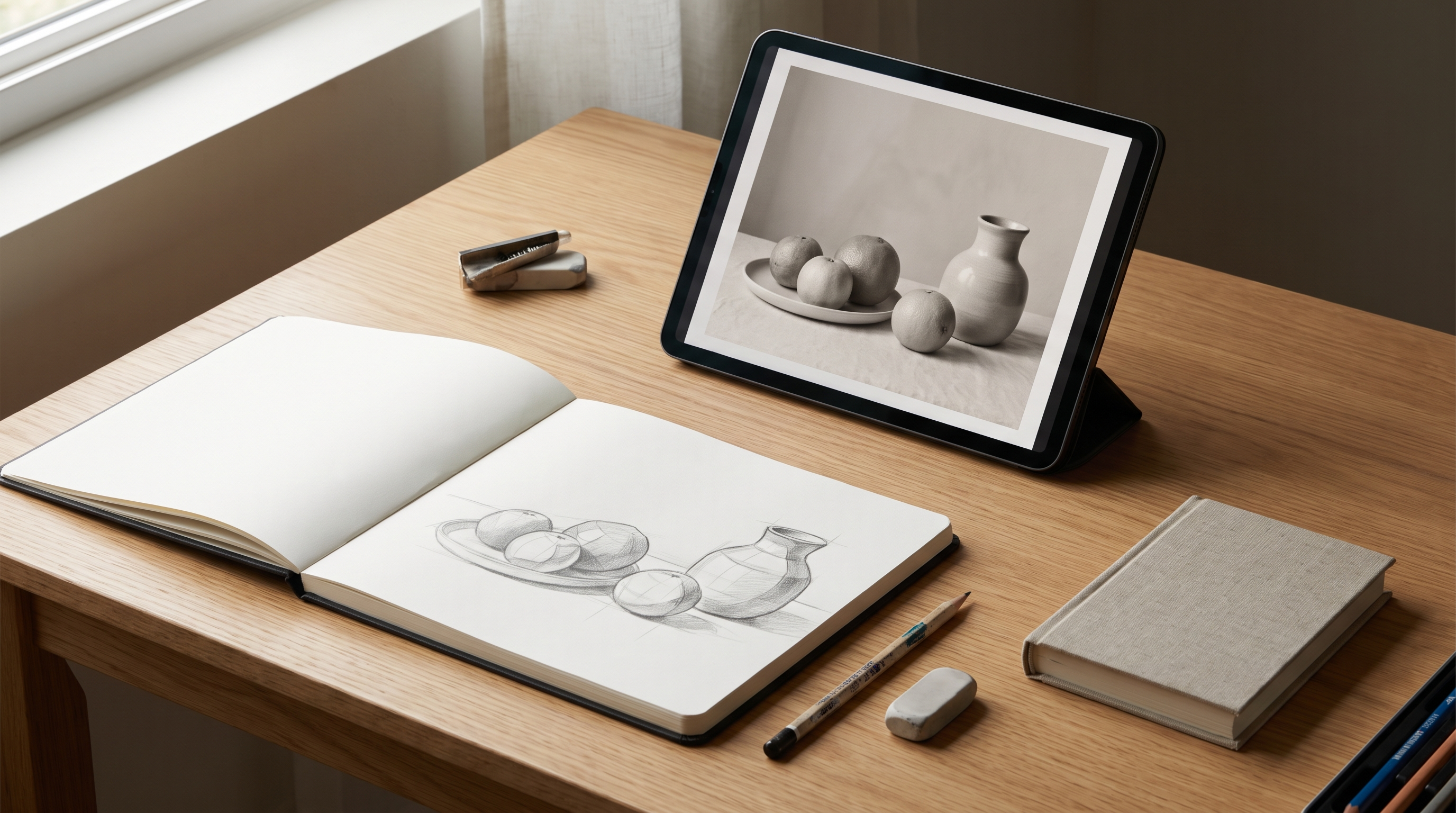
Drawing a still life from observation is one of the best ways to train your eye because it combines proportion, perspective, light, value, and texture in a subject you can control completely.

Choose a simple arrangement

Start with only two or three objects, such as a mug, fruit, and a small box. Use different heights and sizes so the composition does not become a flat row of equally important objects.

Use one clear light source

Multiple light sources create competing shadows and make the value pattern harder to understand. A single side light often creates a clean separation between light and shadow and is easier to study.

Block in the whole composition first

Before drawing individual objects, mark the top, bottom, left, and right limits of the entire setup on the page. Then place each object inside that larger envelope. This helps prevent the drawing from drifting or becoming too large.

Compare proportions

Use one object as a measuring unit. Is the bottle twice the height of the mug? Is the fruit halfway between two objects or closer to one side? Relative comparison is more reliable than guessing every dimension separately.

Work with big value groups

Before texture, divide the scene into three or four major value families. Find the darkest dark, the lightest light, and the large middle values between them. This gives the drawing structure before detail appears.

Watch edge quality

Not every edge should be equally sharp. Some edges disappear into the background, while others become crisp because of strong contrast. Varying edges is one of the easiest ways to make a still life feel more natural and less cut out.

Save texture for the end

Fabric weave, glass reflections, fruit spots, and surface scratches come after shape, proportion, and value. If the big relationships are wrong, detail only makes the wrong structure more convincing.

A useful weekly exercise

Draw the same arrangement three times: once as a line drawing, once as a black-and-white value study, and once using your favorite medium. You will notice that the setup becomes easier to understand each time.

The great advantage of still life is that the subject waits for you. You can slow down, measure, compare, and study without chasing a moving target.

Practice challenge

Build a two-object still life, draw it from observation, then share the result in the Community Feed.

Related Articles

Responses

Your email address will not be published. Required fields are marked *