
Pencil Shading Basics: Understanding Light and Shadow

Pencil shading and light and shadow basics

Good shading is not about pressing harder with the pencil. It is about understanding where the light comes from and how that light changes the value of a surface. Once you can see value clearly, turning a flat shape into a convincing three-dimensional form becomes much easier.

What is value?

Value is simply how light or dark something appears, regardless of its color. Before you shade an object, try to divide it into three broad families: light, middle value, and dark. Those large groups matter more than tiny transitions at the beginning.

The main parts of light and shadow

  • Light side: the part facing the light source.
  • Halftone: the transition from light toward shadow.
  • Core shadow: the darker band on the form away from direct light.
  • Reflected light: light bouncing back into the shadow side from nearby surfaces.
  • Cast shadow: the shadow the object throws onto another surface.

Practice a value scale

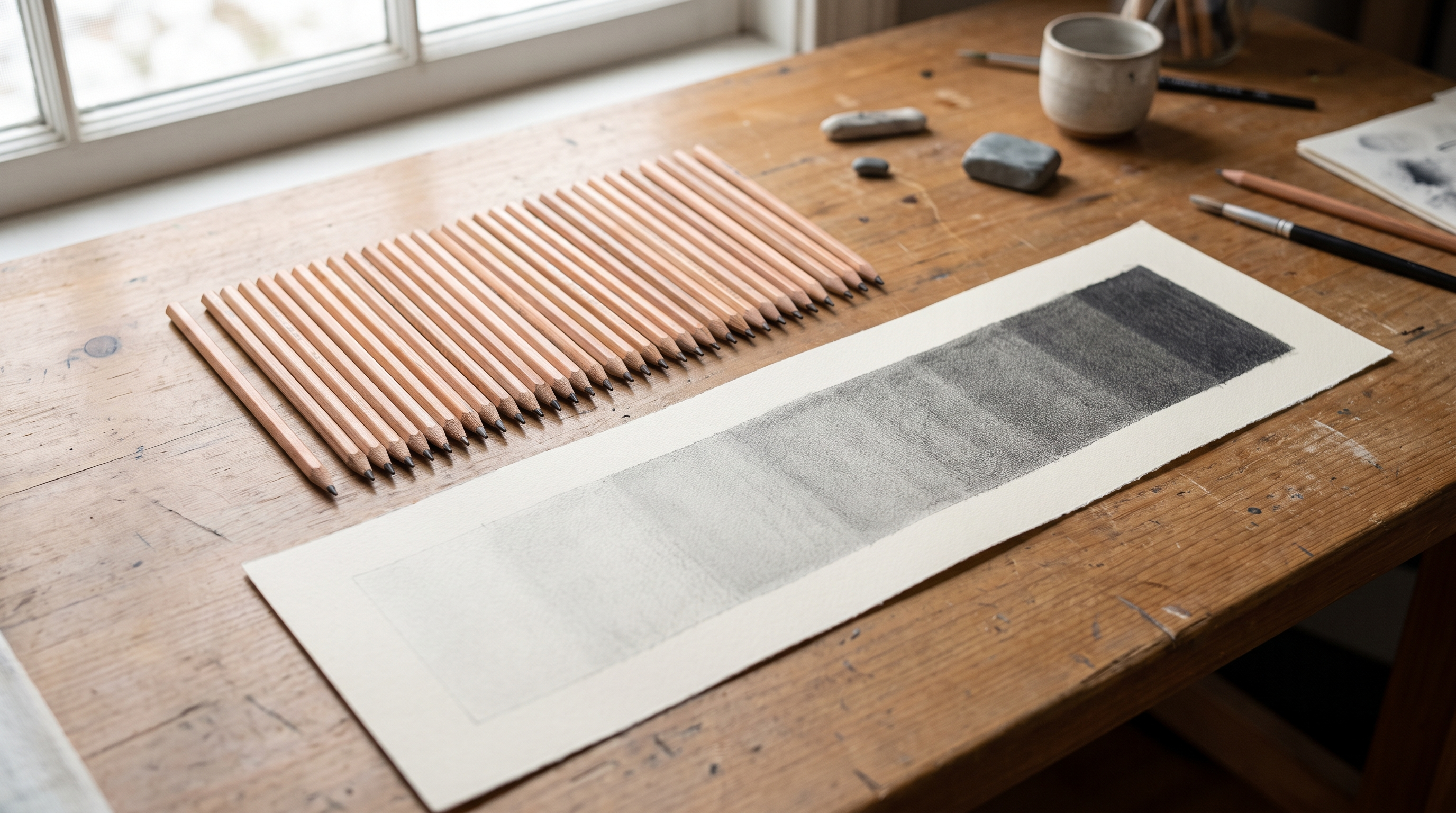
Draw a rectangle and divide it into five boxes. Leave the first one white and make the last one as dark as you can control cleanly. Fill the three middle boxes with even steps between them. This exercise teaches pressure control and prevents the common habit of drawing with only “light” and “dark.”

Start with a sphere

A sphere is one of the best shading exercises because it forces you to create a gradual transition. Choose one clear light direction. Keep the lightest area clean, build the halftones slowly, then deepen the core shadow. Avoid drawing a hard line between light and shadow on a rounded form.

Let your marks describe the surface

Stroke direction can reinforce form. On a cylinder, marks can curve around the surface. On a cube, each plane can hold a more consistent value. When your marks follow the geometry, the shading helps explain the object instead of simply decorating it.

Common shading mistakes

  • Darkening the drawing before the proportions are correct.
  • Using the eraser constantly instead of drawing lightly during construction.
  • Making every shadow equally dark.
  • Forgetting the cast shadow and making the object appear to float.
  • Blending everything until the drawing loses edge variety.

A one-week exercise

Draw a sphere, cube, and cylinder every day under a different light direction. Keep the drawings small. At the end of the week, compare them and look for a wider value range, cleaner separation between light and shadow, and more believable cast shadows.

Shading is an observation skill before it is a hand skill. The more accurately you see value relationships, the easier it becomes to put them on paper.

Share a value study.

Post your sphere, cube, or cylinder study in the Community Feed and note where your light source was placed.

Related Articles

Responses

Your email address will not be published. Required fields are marked *