
أدوات الرسم بالألوان الزيتية للمبتدئين

A Complete Beginner’s Guide to Oil Painting Tools

Oil painting tools for beginners

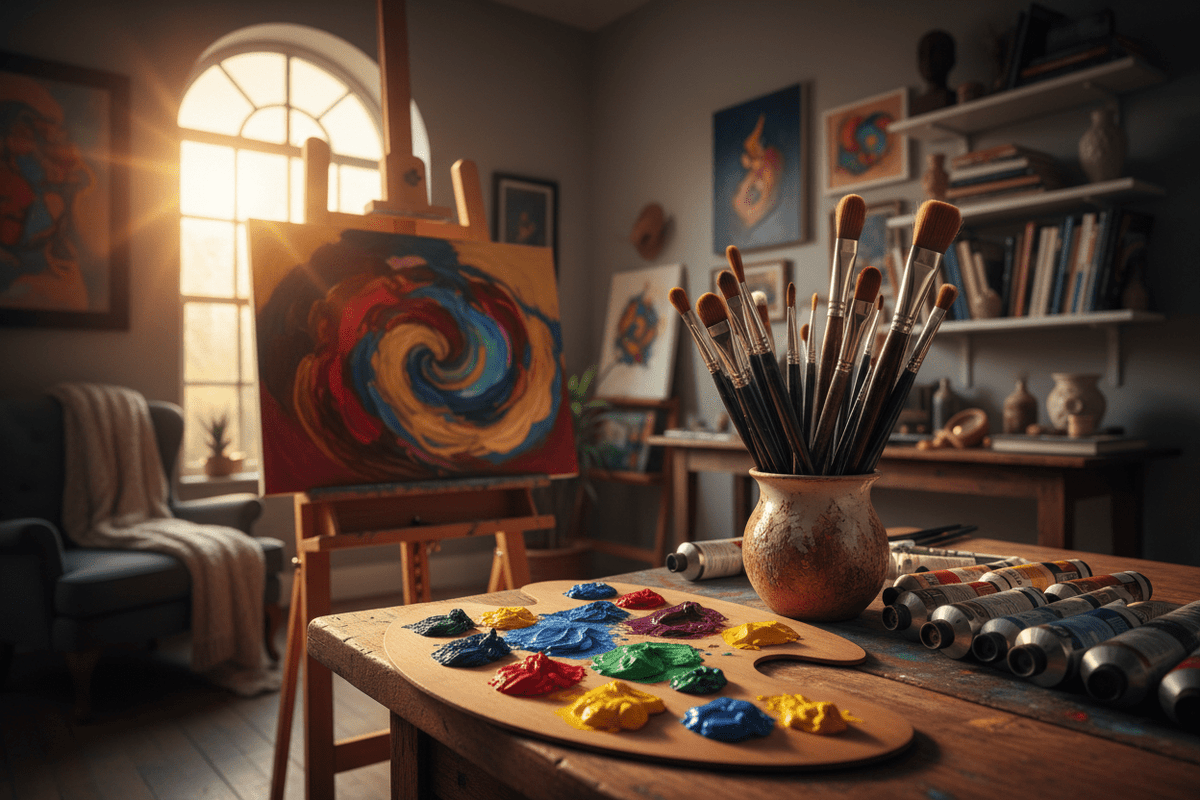
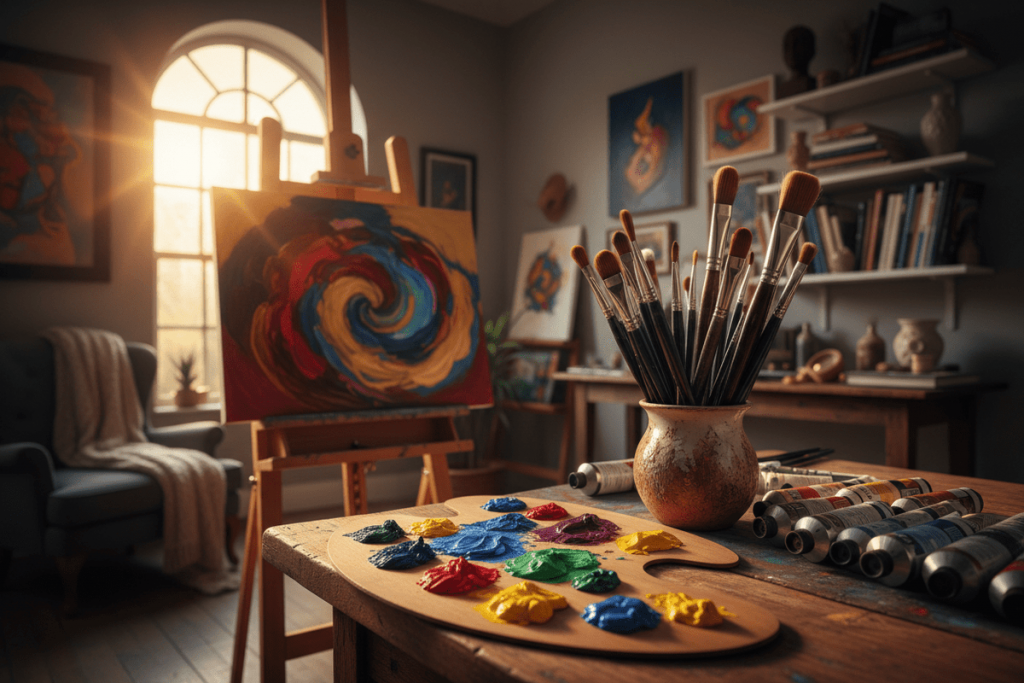
Oil painting has a reputation for requiring a studio full of equipment, but a beginner can start with a surprisingly small kit. The goal is to buy tools that help you learn paint handling, color mixing, edges, and brush control without filling the table with things you do not yet need.

1. Start with a small color palette

You do not need twenty tubes. A limited palette teaches mixing faster because you repeatedly work with the same pigments. A practical starting set can include a warm and cool version of the primary colors, white, and optionally an earth color such as burnt umber.

If you want an even simpler start, use a very limited palette for monochrome or near-monochrome studies before expanding into full color.

2. Choose a few useful brushes

Instead of buying a giant brush set, choose a few sizes that cover large, medium, and small shapes. Flats or filberts are versatile for blocking in forms and controlling edges. A smaller round can help with selected details.

Brush quality matters, but technique matters more. Learn how much paint a brush can carry, how pressure changes a stroke, and when to stop brushing an area.

3. Use a stable painting surface

Canvas, canvas panels, and properly prepared boards can all work. Panels are often convenient for practice because they are easy to store and relatively rigid. Whatever surface you use, make sure it is suitable for oil paint and properly prepared.

4. Keep your palette simple

A flat palette gives you room to mix cleanly. Arrange colors around the edge and keep a larger central area for mixtures. When your palette becomes chaotic, your color mixtures usually become chaotic too.

5. Understand solvents and mediums

Solvents and painting mediums are tools, not ingredients that must be poured into every mixture. Use them deliberately and follow the safety guidance associated with the products you choose. Good ventilation and sensible handling matter in any painting setup.

If you prefer to reduce solvent use, explore approaches and products designed for lower-solvent workflows.

6. Do not forget basic studio items

  • Paper towels or reusable rags for controlled cleanup.
  • A palette knife for mixing larger amounts of paint.
  • Containers appropriate for the products you use.
  • A support or easel that keeps the painting stable.
  • Good, consistent lighting.

What can wait?

Specialty brushes, dozens of pigments, complex mediums, expensive accessories, and large canvases can wait until you understand what your own process actually needs. Buying everything in advance often creates more decisions, not better paintings.

A smart first practice setup

Choose three to six colors, three brushes, a small panel, and one simple subject such as a fruit, mug, or bottle. Spend your first studies learning how much paint to load, how colors mix, how edges change, and how to separate light from shadow.

A good beginner kit is not the biggest kit. It is the smallest setup that lets you practice the skills that matter.

Compare setups with other artists.

Share your current painting setup in the Community Feed and explain which tools you actually use most.

Related Articles

Responses

Your email address will not be published. Required fields are marked *